


The CO2 value: limit values and specifications in certification systems
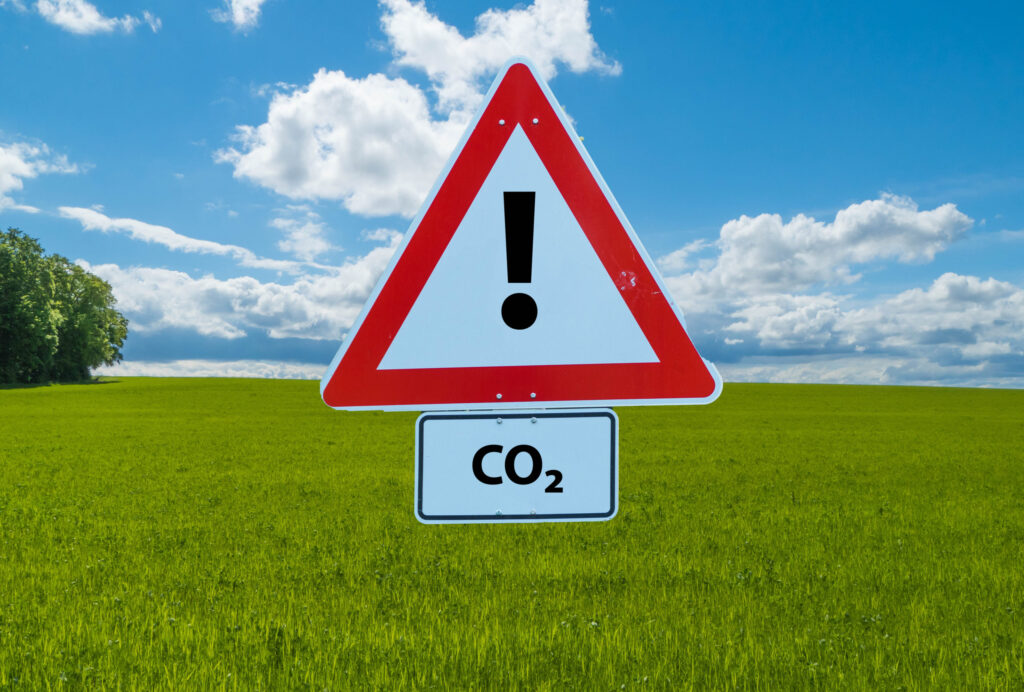
Data from the EPD on the life cycle and CO₂ emissions of the listed building products is now available in the Building Material Scout database.
CO₂ emissions as the most important benchmark for the construction industry?
Reducing CO₂ emissions is of great importance for achieving our climate targets. Germany wants to be greenhouse gas-neutral by 2050, and the interim targets have been tightened once again: by 2030, 65% (previously 55%) and by 2040, 88% fewer CO2 greenhouse gases are to be emitted compared to 1990 levels.
In Germany, the building sector accounts for a significant proportion of emissions – and according to a study conducted by the DGNB in 2021, a good third of all greenhouse gas emissions from a building are generated before it is even used. The planning phase is therefore the time to lay the foundations for a low-emission building. The construction method, components with a large mass (ceilings, external walls and the foundation) and the building materials used, as well as their service life, contribute significantly to the Global Warming Potential (GWP) of a building.
In order to effectively enforce reductions in this area, more and more certification systems, sustainability seals and funding systems are also anchoring CO₂ target values in their project requirements with maximum values or extra points for a life cycle or embodied carbon analysis.
Choosing low-emission building products is now more important than ever – for sustainable buildings and spaces that help to stop climate change!
Overview of the CO₂ requirements of the EU taxonomy and certification systems:
EU taxonomy
- No specific limit value
- CO₂ risks must be recorded and mapped (life cycle assessment)
- Buildings with an area of > 5000 m²: GWP in the life cycle must be calculated
- The current CO₂ reference value of the DGNB is 9.4kg CO₂e/m²a
- No specific limit value
- BREEAM points are calculated individually for each element based on the life cycle greenhouse gas emission data (kgCO₂e)
- No specific limit value
- Global warming potential must be mapped in CO₂e
- LCA value must be at least 5 % lower than for a baseline building
NH class / QNG
The greenhouse gas emissions determined in the building life cycle may not exceed
- 28kg CO₂ e/m² a (QNG-PLUS) or
- 20kg CO₂ e/m² a (QNG-PREMIUM) are
BEG funding
- The requirement value for residential buildings is based on the QNG-Plus guideline value of 28 kg CO₂ e/m² a
- The CO₂ guideline value for non-residential buildings is dynamic
The Building Material Scout database provides you with data from the EPD on the life cycle and CO₂ emissions of the listed building products.
If you have any questions about sustainable project planning, we will be happy to advise you >> Contact