


EU taxonomy: Implementing sustainability in construction projects
Your guide to climate-friendly construction projects.
What is the EU taxonomy?
The EU taxonomy is a statutory classification system of the European Union that defines uniform standards for environmentally sustainable economic activities. The aim is to steer investments towards climate-friendly, resource-efficient and environmentally friendly projects, create transparency and promote the transition to a sustainable economy.
For the construction and real estate industry, this means that projects and construction products must demonstrate that they meet at least one environmental objective of the taxonomy without significantly harming other environmental aspects (Do No Significant Harm – DNSH).
Six environmental objectives of the EU taxonomy
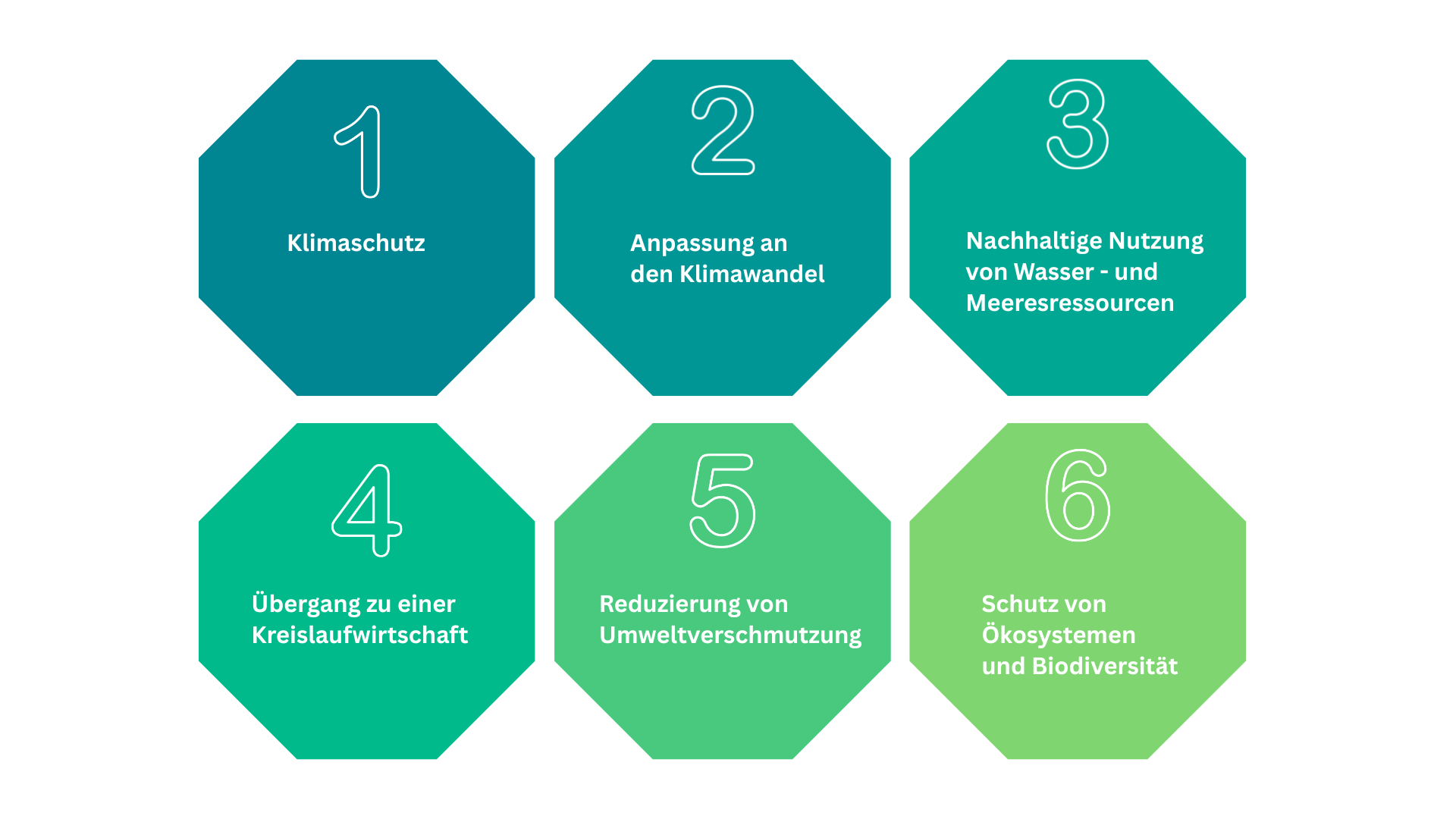
Building projects and products can be considered “taxonomy-compliant” if they support at least one of the following objectives:
Climate protection – reducing greenhouse gas emissions
Adaptation to climate change – measures to minimize climate risks
Sustainable use of water & marine resources
Protection of ecosystems & biodiversity
Reduction of environmental pollution
Promoting a circular economy – efficient use of resources & recycling
EU taxonomy and ESG in the construction industry
The EU taxonomy sets out binding criteria as to which construction products and real estate projects are considered environmentally sustainable. It therefore forms a central component of the environmental area (E) in the ESG framework and makes sustainability measurable and verifiable. In the long term, the areas of social and governance are also to be given greater consideration in the taxonomy.
With the Building Material Scout product database, taxonomy-compliant building products can be easily filtered and documented. For projects that also take ESG criteria into account, the DGNB ESG verification provides comprehensive guidance – both for individual buildings and for portfolios.
In this way, building owners, manufacturers and project participants can ensure that their construction projects are both EU taxonomy-compliant and ESG-oriented.
Who is obliged to report?
- From January 1, 2021: Large companies that already report in accordance with the Non-Financial Reporting Directive (NFRD)
From January 1, 2025: All other large companies
From January 1, 2026: Capital market-oriented small and medium-sized enterprises (except micro-enterprises)
Among other things, companies subject to reporting requirements must provide information on their share of sales, investment and operating expenditure (CapEx & OpEx) and the alignment of their activities with the six environmental goals.
Test criteria and principles
Taxonomy-compliant vs. taxonomy-compliant:
An economic activity is only considered “taxonomy-compliant” if it meets all the requirements of the taxonomy.Do No Significant Harm (DNSH):
No significant harm to other environmental objectives.Minimum social standards:
Companies must prove that they comply with basic social standards.
Advantages for construction projects
Transparency & verifiability
Clearly documented environmental impacts facilitate evaluation by investors.
Promotion of sustainable financing
Banks and investors prefer projects that are taxonomy-compliant.
Competitive advantage
Early adaptation signals innovation and future viability.
Increased efficiency
Internal processes are made more sustainable and data-based.
Sustainable building materials according to EU taxonomy
For construction projects, the EU taxonomy sets out specific requirements for the building materials used, which must be verified and documented. The Building Material Scout helps you to provide this evidence efficiently. You can find out more about the technical requirements for taxonomy-compliant construction products and the support provided by the Building Material Scout here.