


Building resource passport
Find out more about the DGNB Building Resource Passport here.
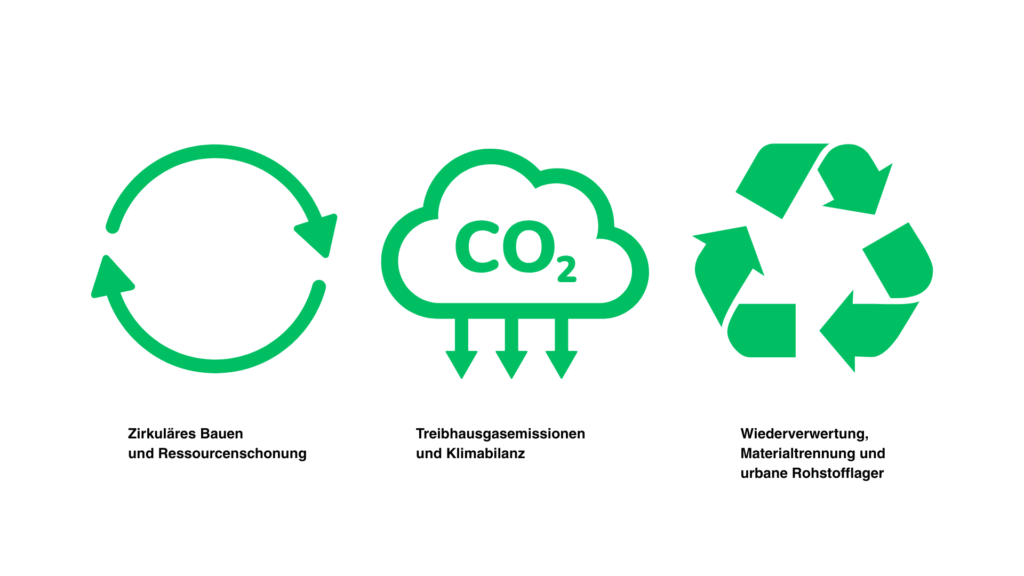
The DGNB's building resource passport supports a sustainable circular economy in the construction industry
Circular construction pursues the principle of planning buildings as resource-efficiently and environmentally friendly as possible. The focus is on reusing existing building materials, minimizing the use of materials and reducing the ecological impact.
In order to be able to assess how much a building contributes to the circular economy, how long they can be used and adapted and whether future dismantling and separation by type is possible, a solid data basis is required. The
It can also be integrated into existing digital tools. The passport serves as a template for documentation and is not recognized in a standardized way. However, its use is recommended for new buildings that are certified according to the DGNB version 2023, as it increases data transparency and facilitates the audit.
Our services for you:
- Personal and individual advice on the subject of the building resource passport
- Advice on recyclability: recommendations on reusability and sustainable material selection, including the use of tools such as the Building Material Scout for material evaluation
- Optimization of construction and renovation concepts: support in planning resource-saving measures
- Integration into certification systems: Support for DGNB certifications
Concept and objectives of the building resource passport
The building resource passport follows a similar approach to the well-known energy performance certificate, but expands it to include information on the use of materials, environmental impact and circular potential of a building. It summarizes all the essential data required to build up raw material depots in cities, to implement circular renovations and new buildings and to enable sustainable and selective demolition.
The passport serves as a central source of information with a view to a long-term functioning circular economy in the construction sector. All steps of a building, from planning to use and subsequent recycling, can be coordinated with each other. Full disclosure of the materials used, their values and ownership structures is essential, as it enables new business models and contributes to quality assurance in existing buildings.
In addition, the building resource passport can be used to assess the circularity of a building in aggregated form.
Advantages for various stakeholders
The building resource passport provides owners of new and existing buildings with a detailed overview of the materials used and potential pollutants. It also shows which valuable resources are contained in the building.
For planners, the passport offers valuable insights, especially if additional detailed sheets are maintained. These can support in-depth analyses and sound advice for building owners, as well as highlighting resource-saving and recyclable options.
Frequently asked questions about the building resource passport
What is the building resource passport?
The building resource passport serves as comprehensive documentation and brings together all the information on the building materials used, their carbon footprint and recyclability over the entire life cycle of a building.
What was the Building Resource Passport used for?
The aim is to create transparency, promote resource-conserving construction and lay the foundations for a functioning circular economy in the construction industry – from planning and use through to dismantling.
What advantages does the pass offer owners?
- Overview of materials used and potential pollutants
- Information on valuable resources contained in the building
- Basis for resource-conserving modernization or future dismantling
What advantages does the building resource passport offer planners and architects?
- Standardized data basis for consulting and planning
- Simple identification of low-resource and circular construction methods
- Support in the certification process for new buildings according to DGNB version 2023
Is the building resource passport mandatory?
There is currently no obligation to use it, and official, standardized recognition is not yet available. However, the DGNB makes a clear recommendation, as the passport simplifies the provision of important information, particularly in the context of certification.
To what extent is the passport compatible with digital tools?
The building resource passport is compatible with widespread digital applications and thus enables efficient data management and evaluation across all project phases.
Can the building resource passport be used for existing buildings?
Yes, it also provides valuable insights into existing buildings, as it reveals the material structure and clearly highlights opportunities for modernization or demolition.
What is the difference between the building resource pass and the energy performance certificate?
Where can I get support in implementing the building resource passport?
If you have any questions about the Building Resource Passport or need support in implementing the DGNB requirements, we will be happy to advise you.